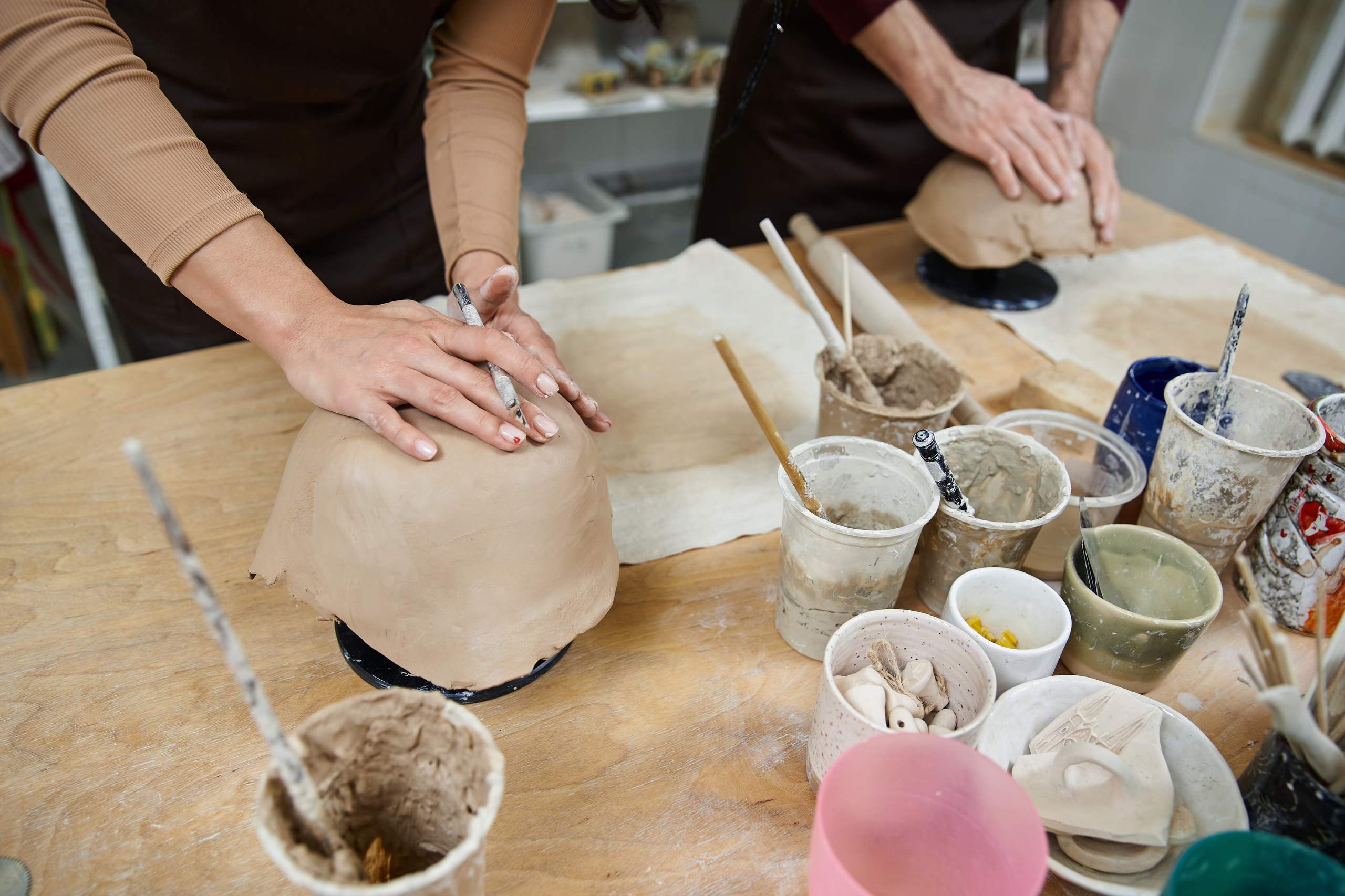
There are lots of mistakes to be made with any creative medium, and clay is definitely no exception. The good news is these mistakes are super common and you will be avoiding them before you know it!
- Learn from your mistakes
Here are a few of the mistakes that even intermediate potters still make now and again.
1. Working With Clay That Is Too Wet
It is very hard to work with clay that is too soft and not a workable consistency. Try letting your clay sit out until it is the right consistency before building with it. Clay that is too soft will often collapse when you try to build with it. Edges won’t hold their shape and details will be almost impossible to add.
2. Making Walls Too Uneven
This is common when you’re learning to build pots. It’s also why you’ll hear so many people say to check the thickness of your walls. If your piece dries with thick sections and thin sections it will dry in an uneven way and will likely be less stable.
3. Joining Pieces Without Enough Preparation
Want to add a handle to a clay pot? Make sure to prepare the surfaces you’ll be joining. Joining two pieces of clay without preparing them will often result in the handle popping off either while the pot is drying or during firing.
4. Rushing the Drying Process
Clay shrinks as it dries. Allowing clay to dry properly is a crucial part of the process and will result in fewer breaks and cracks. Pieces that are too wet will not dry evenly and could even warp. Drying in an uneven way is especially common with pieces that have sections that are uneven in thickness.
5. Adding Too Many Details
Sometimes adding details to your work can overwhelm your piece. When there is so much going on with the piece, the viewer doesn’t know what to look at. If you find that this is an area where you want to push yourself, make a small piece where you try as many different textures and marks as you can. After it dries, look back through your piece to see what you like. Then make another piece, but limit the marks and textures you use to only the ones you liked.
6. Expecting the Final Result to Match the Wet Piece
Once a piece is made it will look very different after it is dry and after it is fired. Even after you start to get a good sense of what to expect, there will be times that the outcome surprises you. One way to start learning what to expect is to keep track of what you made it with and test out glaze on pieces to learn how to use them. Look at your finished pieces to see how the process impacted the work.
7. Trying to Make Everything Perfect
While the goal is usually to make a piece that is in balance, it can be frustrating for a beginner to learn that small imperfections are unavoidable. There will be times that things will go wrong and pieces can break, but this doesn’t mean that you should aim for perfection all of the time. The small imperfections that happen naturally give each piece character. Aim to make your pieces as stable as possible and don’t sweat the small stuff.
Learn From Every Piece
Take a good look at your pieces once they are done. If a handle broke off or if a section of your piece didn’t fire the way you expected it to, it will help to learn from these experiences so that you have a better sense of what you might want to change next time.
Practice With Intention
Practice with intention, not just for the sake of practicing. For instance, if you have issues with uneven walls on pots, use every opportunity to make pots to strengthen your skills. Change one thing at a time to test what works and what doesn’t for you.